The Department of Medicine
Curriculum - Cardiovascular Disease Fellowship Program

The fellowship program is required by the ACGME to train fellows to obtain competency in the following six areas. To accomplish this goal, the program must define the specific knowledge, skills and attitudes as well as the educational experiences needed for residents to acquire. These areas should be considered the six competencies of cardiovascular fellowship training.
-
Patient care that is compassionate, appropriate, and effective for the treatment of health problems and the promotion of health.
-
Medical knowledge about established and evolving biomedical, clinical and cognate sciences and the application of this knowledge to patient care.
-
Practice-based learning and improvement that involves investigation and evaluation of their own patient care, appraisal and assimilation of scientific evidence and improvement in patient care.
-
Interpersonal and communication skills that result in effective information exchange with patients, their families and other health professionals.
-
Professionalism, as manifested through a commitment to carrying out professional responsibilities, adherence to ethical principles and sensitivity to a diverse patient population.
-
Systems-based practice, as manifested by demonstration of an awareness of and responsiveness to the larger system of health care and to use systems resources to provide care of optimal value.
Each rotation month has goals and objectives defined by year in training.
Curriculum Schedule
FY1
14 weeks of Inpatient
1 month of Heart Failure
1 month of Electrophysiology
2 months of Cath
2 months of Echo
1 month of Nuclear
1 month of Cardiac CT/cardiac MRI
1 month of Research
Congenital clinic
FY2
13 weeks of Inpatient
1 month of Heart Failure (away)
1 month of Electrophysiology
1 month of Cath
2 months of Echo
1 month of Nuclear
2 months of Research
2 months of Electives
Congenital clinic
FY3
8 weeks of Inpatient
1 month of Cath
1 month of TEE
1 months of Echo
2 months of Nuclear
1 month of Cardiac CT/cardiac MRI
1 month of Research
4 Months of Electives
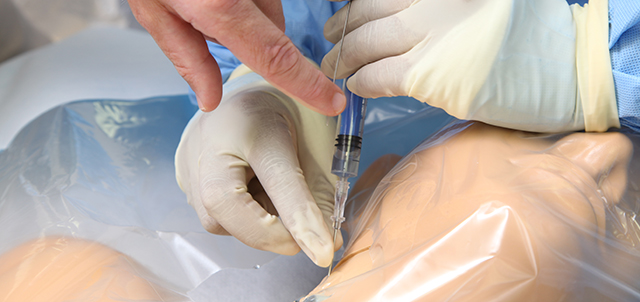
Medical Simulation
Simulation is the imitation of real-life experience including the use of task and virtual reality trainers, as well as standardized patients to refine technical and clinical skills of healthcare professionals. At the UT Center for Advanced Medical Simulation, the goal is continual improvement in quality of patient care and safety through education, practice, and assessment. Simulation can replicate almost any diagnostic or therapeutic situation, from simple IV insertions using low-fidelity task technology to complicated surgeries using high-fidelity, computerized manikins or virtual reality modules.
