News and Events
Collmann Scholarship Supports Medical Student Research on Alcohol Withdrawal Assessment
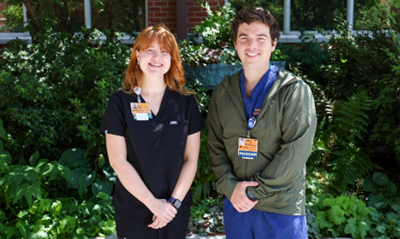
From left to right: Anna Gardner and Blake Briggs, MD
The legacy of I. Reid Collmann, MD, continues to give medical students meaningful, hands-on research experience through the I. Reid Collmann, M.D. Medical Student Educational Scholarship. The program reflects Dr. Collmann’s belief that direct experience with research and its influence on patient care provides an important foundation for a future career in medicine.
This summer, medical student Anna Gardner was the program’s participant at the University of Tennessee Health Science Center College of Medicine, Knoxville. Under the direction of Blake Briggs, MD, associate professor in the Division of Emergency Medicine, Gardner helped conduct a prospective study examining how alcohol withdrawal is assessed and treated in the emergency department at UT Medical.
The study compared two commonly used clinical assessment tools: the Clinical Institute Withdrawal Assessment for Alcohol-Revised (CIWA-Ar), a 10-item symptom-based scale used to estimate alcohol withdrawal severity, and the Richmond Agitation-Sedation Scale (RASS), a simpler measure of a patient's level of agitation or sedation. Researchers sought to determine how often the two assessments provide differing pictures of withdrawal severity and whether those differences are associated with subsequent treatment decisions.
Preliminary results demonstrated frequent disagreement between the two measures. The difference may also have implications for treatment decisions. Among patients with a pretreatment CIWA-Ar score of at least 10, 76.9% of patients who were agitated on RASS received additional sedative medication, compared with 25% of patients who were calm or sedated. Median CIWA-Ar scores were nearly identical between the two groups - 18.0 and 18.5 - suggesting that the RASS may provide clinicians with information not captured by the CIWA-Ar score alone.
The study is ongoing, and the relatively small preliminary sample means the results will require further evaluation. However, the findings raise important questions about relying on symptom-based scores alone when determining treatment for alcohol withdrawal in the emergency department.
Gardner's work on the project included both prospective patient enrollment and data collection as well as a retrospective analysis examining which individual CIWA-Ar symptoms contribute most to the overall score. The analysis found that tremor, anxiety and nausea or vomiting accounted for approximately 55% of the average total CIWA-Ar score. Other categories, including auditory and visual disturbances and orientation, contributed considerably less. The findings suggest that a small number of symptoms may have a disproportionate effect on the total score. Further study could help determine whether those differences affect treatment decisions when CIWA-Ar thresholds are used to guide medication management in the emergency department.
Together, the projects allowed her to participate in multiple stages of clinical research, from study development and data collection to interpretation of results. "This experience has granted me the opportunity to learn how clinical research is conducted and how I might integrate it into my future practice as a physician," Gardner said. "Being able to launch the prospective portion of the project has been very rewarding in addition to being a great learning opportunity. It has been an extremely enriching summer thanks to the generosity of the Collmann family."
Posted September 28, 2026
About the UTHSC COM-Knoxville
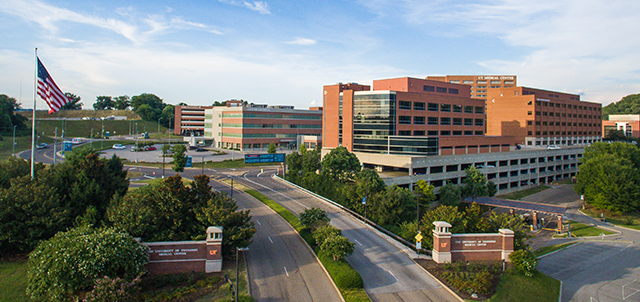
Currently, the University of Tennessee Health Science Center College of Medicine, Knoxville (UTHSC COM-Knoxville) is the sponsoring institution of 13 residency programs and 19 fellowships. The program directors of these training programs share a passion for the education, training and well-being of its GME trainees. Click here to learn about each of our departments and programs. The UTHSC COM-Knoxville is located on the University of Tennessee Medical Center's campus.