News and Events
UTHSC COM-Knoxville Imaging Agent Meets Primary Endpoints in Phase III Cardiac Amyloidosis Study
A groundbreaking cardiac amyloidosis imaging agent developed by the Amyloidosis and Cancer Theranostics Program (ACTP) at the University of Tennessee Health Science Center College of Medicine, Knoxville (UTHSC COM-Knoxville), has reached another major milestone following positive Phase III clinical trial results announced by Bayer.
Bayer announced May 7 that the investigational PET tracer iodine 124I-evuzamitide successfully met the primary endpoints in the Phase III REVEAL study, demonstrating strong sensitivity and specificity for diagnosing cardiac amyloidosis using PET/CT imaging. The imaging agent, also known as AT-01, was originally developed from a proprietary pan-amyloid binding peptide created nearly two decades ago by Jonathan S. Wall, PhD, Distinguished Professor and Assistant Dean for Research at UTHSC COM-Knoxville and his research team.
The REVEAL study evaluated the tracer in patients with suspected cardiac amyloidosis and found the imaging agent could accurately identify the disease through visual PET/CT scan interpretation. Bayer noted the study met its primary endpoints for both sensitivity and specificity, marking an important step toward potential regulatory submission with the U.S. Food and Drug Administration.
Cardiac amyloidosis is a severe and often underdiagnosed disease caused by the buildup of misfolded amyloid proteins in the heart. Delayed diagnosis can lead to heart failure, repeated hospitalizations, and early mortality. According to Bayer, patients frequently experience a prolonged diagnostic journey involving multiple specialists and imaging procedures before receiving an accurate diagnosis.
The successful Phase III data build on momentum generated earlier this year when Bayer acquired AT-01 and a second investigational imaging agent, AT-05, from Attralus, Inc. The acquisition highlighted the growing global interest in molecular imaging and precision cardiology, as well as the translational impact of research originating at UTHSC COM-Knoxville.
Unlike traditional amyloid imaging agents that focus on a single amyloid subtype, AT-01 was designed as a pan-amyloid tracer capable of detecting multiple types of amyloid throughout the body. Researchers believe this broader capability could improve diagnosis, disease monitoring, and treatment planning for patients with amyloidosis.
"Cardiac amyloidosis is a devastating disease but one for which novel effective treatments are now available. Accurate diagnosis of the condition using 124I-evuzamitide PET/CT, early in the disease, means that the patients get the most benefit from these treatments. This imaging agent has the potential to transform the diagnostic pathway for patients and enable the detection of all types of cardiac amyloidosis, which will lead to better care and outcomes for patients," said Dr. Wall.
The REVEAL study was conducted at 19 centers across the United States and enrolled 170 adults with suspected cardiac amyloidosis. Bayer stated it plans to present the full study results at an upcoming scientific congress.
Posted June 1, 2026
About the UTHSC COM-Knoxville
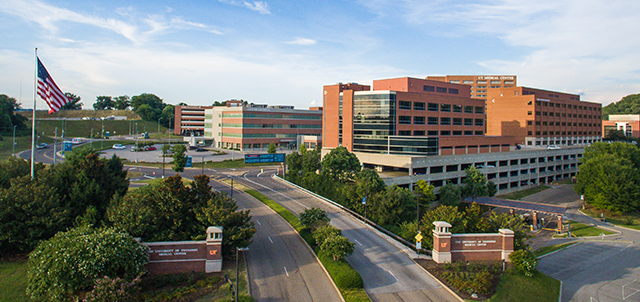
Currently, the University of Tennessee Health Science Center College of Medicine, Knoxville (UTHSC COM-Knoxville) is the sponsoring institution of 12 residency programs and 18 fellowships. The program directors of these training programs share a passion for the education, training and well-being of its GME trainees. Click here to learn about each of our departments and programs. The UTHSC COM-Knoxville is located on the University of Tennessee Medical Center's campus.